


How PixForce Is Redefining Inspections from the Sky Down

An Inside Look At How PixForce Evolved From Drone-Based Data Capture To AI-Driven Inspection Systems—Reshaping How Industries Monitor, Analyze, And Act On The Physical World
By Evan J. Cholfin
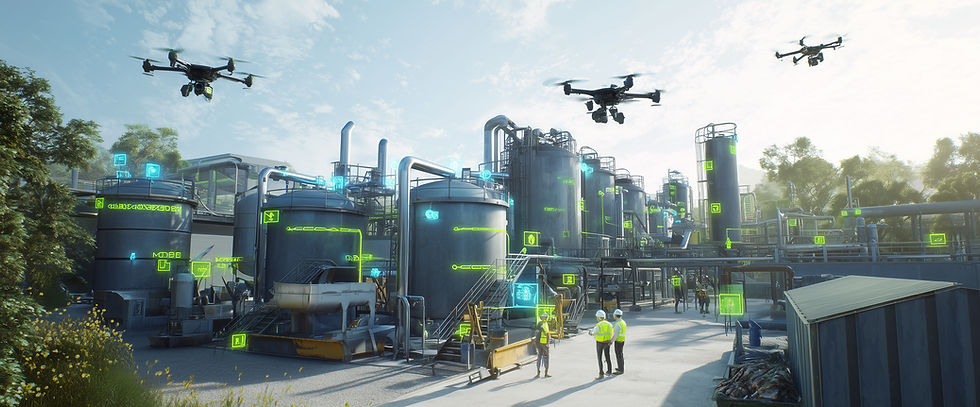
There is a moment in many industries where scale stops being a growth problem and starts becoming an information problem. Inspections are a perfect example. Whether it’s infrastructure, energy, or environmental monitoring, the challenge has never just been collecting data—it’s making sense of it.
In this episode of AI SPEED, my conversation with Daniel Moura highlights how that challenge is being redefined. What begins with drones—tools designed to capture vast amounts of visual information—quickly evolves into something much more significant: the role of AI in turning that information into actionable insight.
PixForce’s journey reflects a broader shift I’m seeing across industries. It’s not enough to gather data anymore. The real value lies in interpretation. Drones can capture images at scale, but without intelligence layered on top, that data remains underutilized. What PixForce is doing is bridging that gap—combining data collection with AI-driven analysis to create systems that can actually inform decisions.
What stood out to me in this conversation is how natural that evolution feels in hindsight. Start with visibility—seeing more, capturing more, reaching places humans can’t easily access. Then move toward understanding—using AI to detect patterns, identify risks, and surface insights that would otherwise be missed.
We also explored something I find increasingly important: how industries adapt when the bottleneck shifts. It used to be access to data. Now it’s the ability to process and act on it effectively. Companies that recognize that shift—and build accordingly—are the ones that begin to separate themselves.
Another idea that stayed with me is how grounded this work is in real-world application. It’s easy to talk about AI in abstract terms, but inspections are tangible. They impact safety, operations, and cost. The systems being built here don’t just need to work—they need to work reliably, repeatedly, and at scale.
This episode explores how drones and AI are converging to reshape inspection workflows, how visual data is becoming a strategic asset, and why the future of monitoring may depend less on human observation and more on intelligent systems.
If you’re interested in how AI is transforming industries that operate in the physical world, or how data collection and analysis are merging into a single continuous process, I think you’ll find this conversation worth your time.
Because the future of inspections may not just be about seeing more.
It may be about understanding what we see.


Comments